Hours, closures, light and the flame
Arc de Triomphe: best time to visit
When to climb the Arc de Triomphe: the opening pattern, closure days, evening light and the flame, plus how long to allow, getting there and accessibility.
Check tours on Viator ↗Quick answer
Go in the evening if you can. The arch stays open late, later in summer than in winter, with last admission 45 minutes before closing, so you can see Paris after dark and then watch the flame rekindled at 6:30 pm. Avoid 1 May, 8 May, 14 July and the morning of 11 November, when it is closed. The operator publishes no crowd figures, so no hour is guaranteed quiet.
Why there is no single best hour
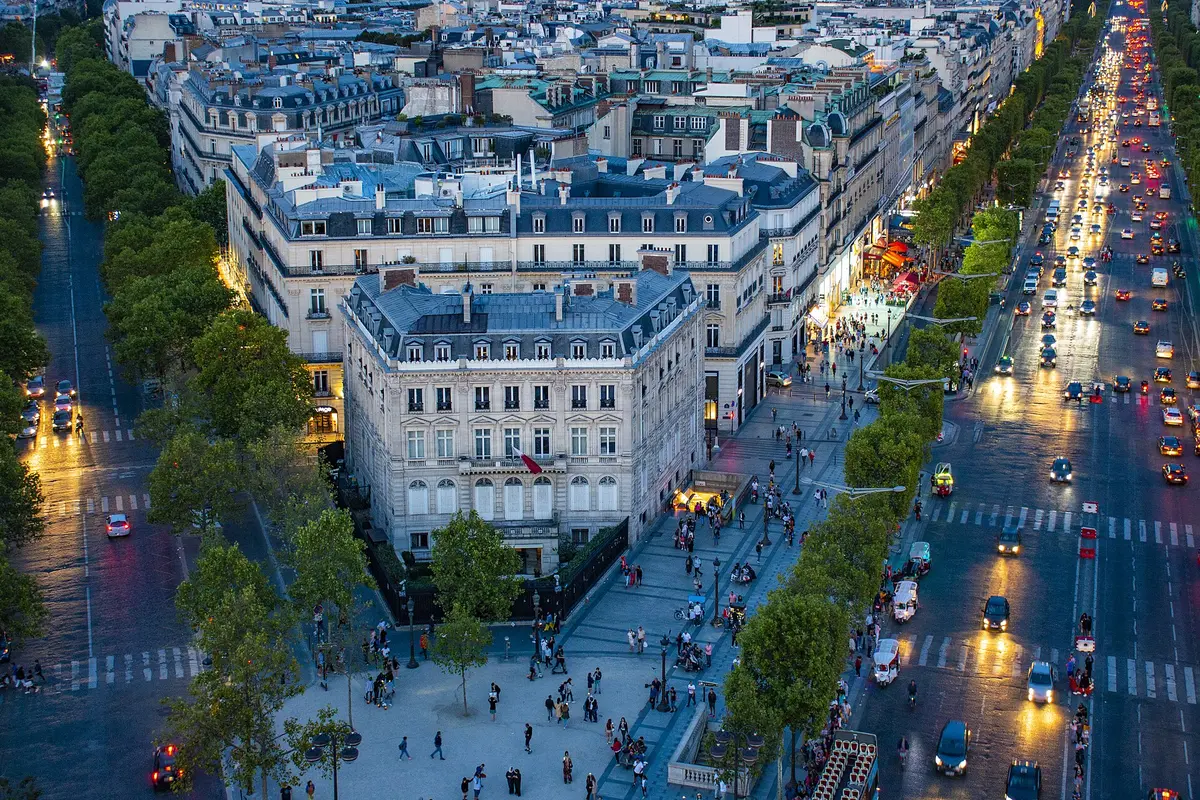
The operator publishes no queue times or crowd figures, so any claim about the quietest hour is a guess. What it does publish is the opening pattern, and that shapes the choice. The arch opens in the morning and closes late in the evening. Two seasons apply, April to September and October to March, and it closes later in summer. Last admission is 45 minutes before closing, and on Tuesdays it opens an hour later than on other days. Within those limits you are choosing between morning, afternoon and the hours after dark.
Days it is closed
The operator lists four annual closures: 1 May, 8 May, 14 July and the morning of 11 November. The Bastille Day military parade starts at the arch. For 2026 it also lists an early close on 24 and 31 December. Beyond that, it can close all or part of the arch at short notice for official ceremonies or bad weather. If your trip is built around one date, choose a ticket you can cancel and check the operator's closure list the week you travel.
Read next: The Arc de Triomphe on Bastille Day
Summer or winter
This guide gives no climate figures, because the sources do not. What the hours show is two seasons, with the later closing from April to September. In winter it gets dark early, so you can see the city lit up without waiting for late evening, while in summer the light lasts well into the evening. The terrace is open to the sky, so weather counts for more here than in a museum, and the operator may close it in adverse weather. From November to March the first Sunday of each month is free for everyone.
Day or after dark?
In daylight you can study the sculpted groups on the pillars and pick out landmarks across the city. After dark the view changes: you look down the twelve avenues that meet at the arch, including the Champs-Élysées and the Avenue de la Grande-Armée, as streetlights and traffic trace them. You do not have to guess which you prefer. The operator offers an online 360° view of the terrace, by day or night, in French, English and Spanish, which lets you compare before you commit to a date.
Ending the day at the flame
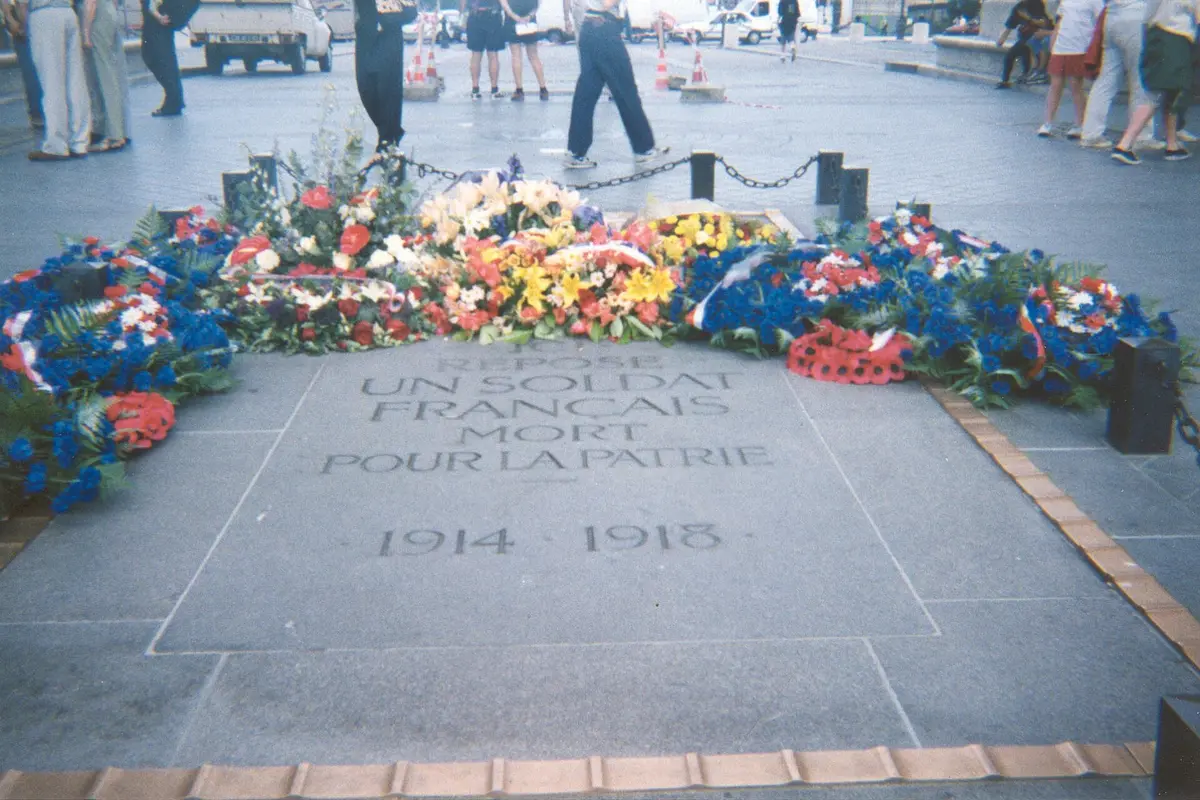
Every evening at 6:30 pm, a veterans' association rekindles the flame above the Tomb of the Unknown Soldier. The operator gives one time for every evening, and access to the Tomb of the Unknown Soldier is free, so you do not need a ticket to watch. If you climb first, plan to be back at the base before the ceremony starts. Last admission is 45 minutes before closing, so an evening climb leaves room either side of it.
Read next: The eternal flame ceremony at the Arc de Triomphe
How long to allow
Neither the operator nor the booking pages give a figure for the climb alone. A sensible allowance for the whole visit is one to two hours: the underground passage, getting your ticket checked, 284 steps, the museum hall and the terrace. The operator's own lecture tour runs about an hour and a half, which is a fair guide for a visit with commentary. If you want the flame ceremony too, add time rather than squeezing it between the descent and the next plan.
Getting there and back
Take Métro line 1, 2 or 6, or RER A, to Charles de Gaulle–Étoile. The arch stands on a traffic island that you cannot cross on foot, so you enter through the Passage du Souvenir, the underground passage at the top of the Champs-Élysées or the Avenue de la Grande-Armée. You leave the same way. If you arrive from outside Paris by car, the operator suggests the Porte Maillot exit and the Avenue de la Grande-Armée, or the Porte Dauphine exit and the Avenue Foch.
What you see, hear and read
Inside, the museum hall tells the monument's history with large models and interactive exhibits. Visit documents are free in the hall and come in 11 languages, and the visit flyer can be downloaded in languages including Dutch, German, Portuguese, Spanish, Italian and Japanese. The operator's web app, available in five languages, offers three routes: the essentials, the façades and the timeline. Lecture tours are given in French and English only, and the operator sells them online only.
With children, and what to wear
Under-18s enter free. Pushchairs are not allowed inside, but the access control officers keep them while you climb, and bags must be no larger than 40 by 40 by 20 centimetres. The operator runs a family visit with a playbook, and offers heritage workshops for those who want guidance. Its visit rules list banned objects but no dress code, so what matters is comfortable shoes for a spiral stair of 284 steps, which is the only route up for now.
Read next: Visiting the Arc de Triomphe with kids
Reduced mobility and the lift
The operator says the lift has been out of service since late July 2026, with a return in 2027 and the date to be announced. Wheelchair users reach the base of the arch by taxi or private vehicle at a drop-off point on the Grande-Armée side, and wheelchairs are lent free on presentation of ID. Noise-cancelling headphones, a magnifying glass and an easy-to-read booklet are available from the ticket office. A disabled visitor and one companion enter free with proof. The site holds the Tourisme & Handicap label.
Who this isn't for
If you need a guaranteed quiet monument, no timing can promise it, because the operator gives no crowd data. If you cannot climb 284 steps, the terrace is out of reach while the lift is closed, though the flame and the tomb at the base are free to see. If your only free day is 14 July, the arch is closed to visitors, and the parade is a separate free event on the Champs-Élysées.
Frequently asked questions
What is the best time to visit the Arc de Triomphe?
There is no official quietest hour, because the operator publishes no crowd figures. The practical choice is the late evening, when the arch is open after dark and last admission is 45 minutes before closing. Check the closure days first.
Is the Arc de Triomphe open at night?
Yes, it stays open into the late evening, later in summer than in winter. Last admission is 45 minutes before closing. The operator's hours page has the current times, and it can close at short notice for ceremonies or bad weather.
What time is the flame ceremony at the Arc de Triomphe?
Every evening at 6:30 pm, when a veterans' association rekindles the flame above the Tomb of the Unknown Soldier. Access to the Tomb of the Unknown Soldier is free, so you can watch without a ticket.
How long does a visit to the Arc de Triomphe take?
Allow one to two hours for the whole visit, including the underground passage, 284 steps, the museum hall and the terrace. The operator gives no official climb time. Its lecture tour runs about an hour and a half.
When is the Arc de Triomphe closed?
On 1 May, 8 May, 14 July and the morning of 11 November each year. It also closes early on 24 and 31 December 2026, and can close all or part of the arch at short notice for official ceremonies or bad weather.
Is the Arc de Triomphe free on Sundays?
On the first Sunday of January, February, March, November and December, yes, for everyone. Under-18s, and 18 to 25 year olds who are EU nationals or non-EU legal residents of France, enter free on any day with proof.
Sources